Rethinking Personal Productivity

Evelyn Tian
With close to 20 years of experience as a coach, mentor, trainer and consultant, I never imagined AI would become such an integral part of my working life.

What surprised me most is finding in AI a thinking partner who can challenge my ideas, explore different perspectives and help turn thoughts into tangible outcomes.

In this article, I share how I integrate AI into my everyday work to amplify my experience and professional expertise.

AI Has Become My Thinking Partner: Rethinking Personal Productivity

I never imagined AI would become such an integral part of my working life.

With close to 20 years of professional experience as a coach, mentor, trainer and consultant, I've developed my own ways of thinking, working, solving problems and supporting others. At this stage of my career, finding someone who can truly challenge my thinking, bounce ideas around and engage with me at a similar level of experience isn't always easy.

This is where AI has surprised me. It has become an accessible thinking partner, available whenever I need to explore an idea, challenge an assumption or look at a problem from a different perspective.

Much of what I do revolves around thinking, creating, communicating and preparing. Whether I'm designing a workshop, preparing for a mentoring conversation, developing a training programme, writing consulting guidelines or putting together a presentation for senior leadership, there is always an idea to explore, a problem to solve or something to turn into a meaningful output.

AI doesn't diminish the value of professional expertise. It amplifies it, allowing us to focus more on where our experience, judgement and creativity create the greatest value.

Here are a few examples of how AI has become part of my everyday working life.

As a coach and facilitator: A partner to bounce ideas with

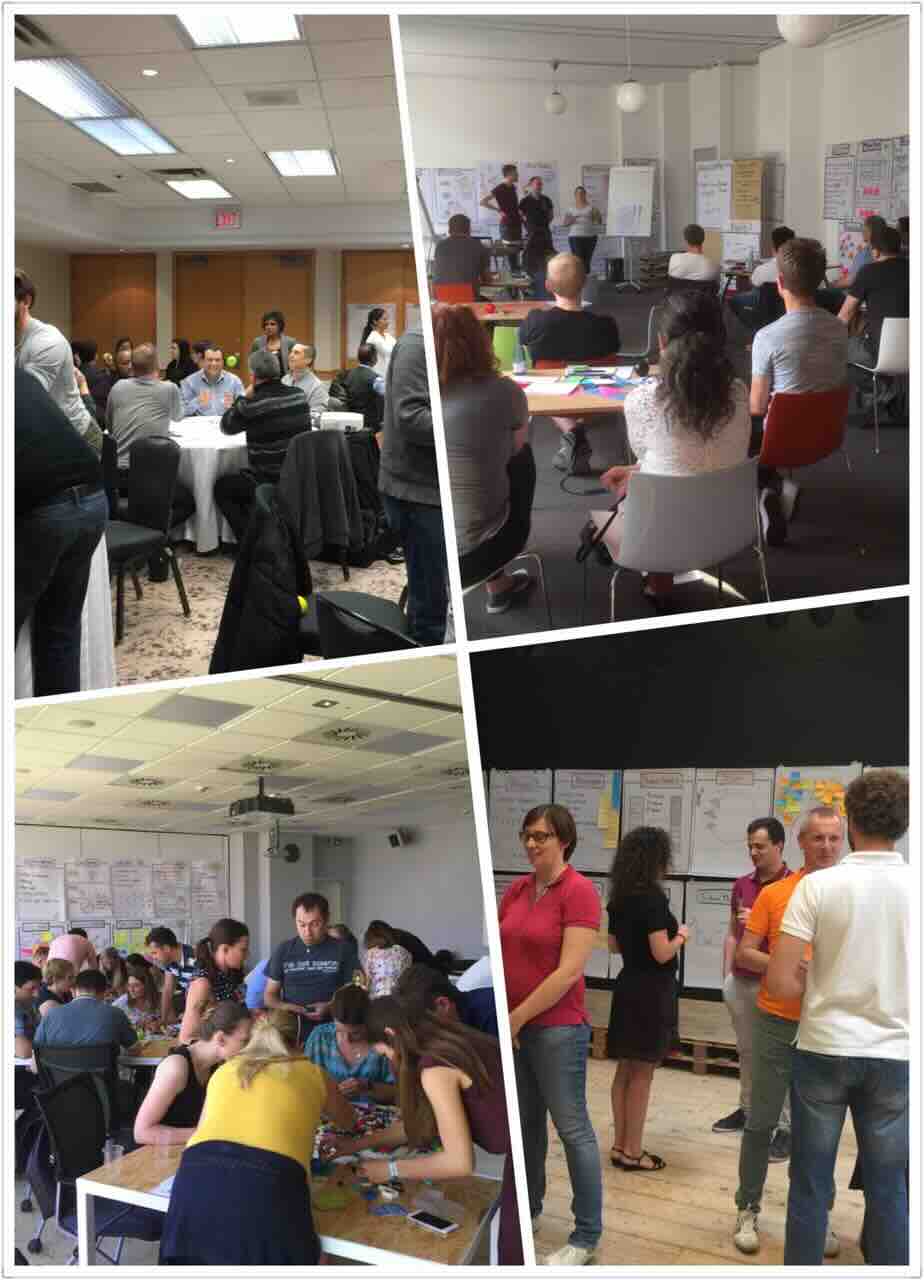
When designing and facilitating workshops, I need to think about much more than the agenda. I need to understand the objectives, the participants, the group dynamics and the outcomes we want to achieve.

Based on all the thoughts and information, I develop facilitation plans. I now use AI to explore different approaches, improve interactiveness level, and stimulate thinking.

Sometimes I start with a clear idea; other times, I simply have a thought that needs developing. I can have a conversation with AI, challenge different perspectives and explore alternatives until I find an approach that works.

It feels like having a colleague available whenever I need someone to think things through with, and at the right level of competence and understanding, which is not easy for people like me who is a trainer, and facilitator for close to 20 years. 

The result is that I spend less time staring at a blank page and more time thinking about the people, conversations and outcomes that really matter.

As a mentor: Designing meaningful conversations based on their homework projects
Mentoring is about helping people think through their challenges, explore possibilities and find their own way forward. It requires listening, asking the right questions and sometimes challenging someone's perspective.

I use AI to help me prepare for mentoring conversations, explore different ways of approaching a situation and generate thought-provoking questions. It helps me consider alternative perspectives that I might not have initially thought about.

I also use AI to support the review and assessment of students' homework projects. By configuring an AI agent with specific assessment criteria and instructions, I can get support in evaluating their work, identifying gaps and highlighting areas for improvement. This gives me additional insights into their understanding, progress and development needs.I can then use these insights to prepare for follow-up conversations, asking more relevant questions, addressing specific challenges and making our discussions more focused and valuable.

Of course, the human connection, trust and empathy remain at the heart of mentoring. AI doesn't replace these. It helps me become better prepared, more insightful and more intentional in how I support each person's growth.

As a trainer: Making learning experiences easier to create

Running training sessions involves developing content, structuring learning journeys, creating practical exercises and finding engaging ways to explain concepts.

AI helps me with all these activities. I can develop training outlines, generate examples, design exercises and adapt explanations to different audiences.

I have also configured my own AI agent to help review students' homework. By providing assessment criteria and clear instructions, I can delegate much of the initial review and feedback preparation.

Of course, I still apply my own judgement to the final assessment. But having an AI agent support a recurring activity makes the process considerably more efficient.

It is an interesting shift: moving from simply using AI to creating an assistant that understands a specific task and helps me perform it repeatedly.

As a consultant: Turning thoughts into professional deliverables

Consulting involves a continuous flow of ideas, analysis, guidelines, frameworks and presentations. Turning these into well-structured professional deliverables can take considerable effort.

My approach has been to start with my thoughts, and work through the ideas with AI, develop the structure, challenge assumptions, identify gaps and refine the content. I don't always need to have everything figured out before I start writing.

Preparing presentations has also become a much enjoyable task, as my AI agent helps me sharpen key messages, structure arguments and translate complex ideas into clear executive communication. 

It allows me to concentrate more on the quality of the thinking and the message, rather than the mechanics of producing the deliverable.

And then there are the everyday things...

Some of the most useful applications are actually the smaller, everyday activities, which I am sure you are doing also. I use AI particularly when dealing with sensitive topics or communicating across different cultures. Sometimes I write my initial response based on my immediate emotions and ask AI to help me reconsider the tone, clarity and potential interpretation.

It helps me pause, look at things from another perspective and communicate more thoughtfully.

I also use AI to help manage my calendar, organise activities and reduce the administrative overhead of a busy working life.

Individually, these may seem like small improvements. Together, they make a meaningful difference.

The real change: From using AI tools to working with AI

Looking across these experiences, I realise that the biggest change isn't any particular AI application. It is how I have integrated AI into my working habits.

I use it to think, explore, create, review, communicate and organise. Sometimes I need a sounding board. Sometimes I need an assistant. Sometimes I need an agent to handle a recurring task.

But one thing remains unchanged: I bring the experience, professional judgement, creativity and understanding of people and business. AI helps me put those capabilities to better use.

Perhaps this is what personal productivity with AI should really mean.

It isn't simply about producing more in less time. It is about reducing the effort involved in getting things done, improving the quality of our work and creating more space for the activities where our experience, creativity and judgement make the greatest difference.

AI is no longer just another tool in my toolbox. It has become part of how I think and work.

And I suspect we are only beginning to discover what that means for personal productivity.

This is the first dimension of AI strategy:
empowering individuals to work smarter, think better and achieve more.

In the next article, I will explore how organizations can take this further by transforming workflows, integrating AI into their tools and reducing the effort required to deliver products and services.


About the Author

Before we delve deeper, if you've recently stumbled upon my blog and find yourself wondering, "Who is she?" "Why should I be reading her blogs?"
Write your awesome label here.
  • I hold the designation of Certified Agile Coach (CAC) with the Scrum Alliance, the sole member-driven nonprofit certifying body in the agile space since 2001. Additionally, I am honored to have been recognized as both a Certified Team Coach and Certified Enterprise Coach with the Scrum Alliance for over a decade.
  • Since 2011, I've been privileged to mentor Agile Coaches across the globe, guiding passionate practitioners from 80 countries (as of Nov. 2023) in their professional journeys. Among my mentees are Certified Agile Coaches, Certified Scrum Trainers (CST), Accredited Kanban Trainers, and individuals who share their expertise at conferences worldwide.
  • Furthermore, I hold the Professional Certified Coach (PCC) credential from the International Coaching Federation (ICF). I am also trained as an Advanced Certified Coach Mentor, and a professional coach supervisor. I specialize in providing coaching supervision for professional coaches to support their ongoing development.
  • As the co-founder of the Enterprise Coaching Institute, an ICF accredited training provider, I am committed to offering coaching-based leadership training. Our aim is to empower leaders to excel by equipping them with professional coaching skills and to foster the growth of professional coaches in the industry.

I speak and keynote at international conferences since 2011 about organization transformation, Agile, leadership, agile coaching, and professional coaching.

Write your awesome label here.

Join our community

Thank you!
We have supported practitioners from 80 countries, and have monthly free activities for our community members.

You can bring any topics to our activities, or just get ready to network.
Created with